Choose the background story before the interview aperture
A practical lens and depth-of-field planning guide: decide what the viewer needs to see, then rehearse focus and exposure with the actual setup.
Original evergreen guide researched October29,2026. Source facts are credited below; examples and planning commentary are IAM analysis, not a new announcement.
Start with the information in the frame
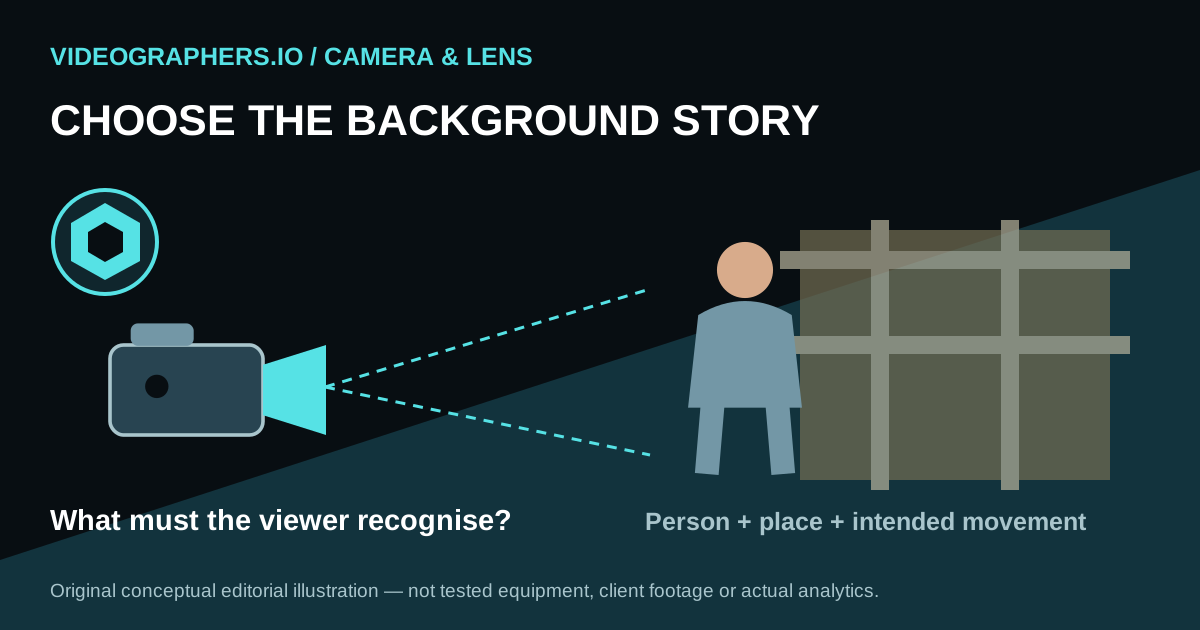
A workshop interview can communicate two stories at once: what the person says and what the place tells us about their work. Before asking for a blurred background, decide whether the viewer needs to recognise the workshop, a demonstration object or another person. Background softness is a creative choice with practical consequences, rather than a universal definition of professional video.
Nikon’s educational guide explains that depth of field can separate a subject from the background or keep more of the scene in focus. It discusses aperture and the use of neutral-density filtration in bright conditions. This evergreen article uses that short technical baseline, then offers original IAM planning analysis. It is not a lens review or a test of a particular camera.
Translate the idea into a production question
Write a plain-language intention in the brief: the speaker must be clear, and the tool behind them should remain recognisable. That gives the camera operator a problem to solve with the real lens, room and lighting. It is more useful than copying an aperture number from an unrelated film whose distance, sensor, framing and exposure conditions may differ.
For a fictional crafts business, compare two compositions before the interview begins. One emphasises the speaker; the other also explains the working environment. Ask the producer which information is essential to the story. Do not show the client an attractive rehearsal frame and quietly assume it is the only composition that will be delivered.
Include the movement, not just a still pose
A seated person may lean forward, turn towards a colleague or hold an object closer to the camera. Include the intended actions in a short rehearsal and let the responsible camera operator assess focus through the movement. A pleasing still frame does not demonstrate that the planned sequence will remain usable while the subject performs the action.
Allow the operator to change the arrangement if the creative request conflicts with the practical conditions. Nikon points readers to their camera manual for model-specific controls. Do not assume that a filter, autofocus feature or menu setting from another model is available or appropriate. Equipment compatibility and exposure choices belong to the actual production setup.
Make the choice visible in the handoff
Record the agreed composition, important background information and any movement that needs another look. Keep a reference frame in the authorised project materials if the client has agreed to that handling. This is a continuity aid for the team, not permission to publish a participant’s image or claim that a manufacturer endorsed the production.
For the production business, the benefit is a clearer conversation about what the film should communicate. Explain the choice in terms of the viewer’s understanding rather than selling one visual effect as automatically superior. The brief, rehearsal and decision note can help colleagues assess the same intention; they do not guarantee a particular aesthetic result or remove the need for a skilled operator.
Sources and editorial context
Manufacturer guidance is credited directly below. Examples and planning recommendations are original IAM editorial analysis, not hands-on testing or measured client results.
Nikon — Aperture and ND filters for movies — source date not stated on the retrieved page
An enquiry does not confirm a booking, availability or provider acceptance. Include your location, project scope, intended dates and contact details. Avoid sending private client footage before agreeing a secure transfer route.