Plan the lens configuration before the gimbal move
An original camera-movement preparation guide grounded in DJI’s model-specific balancing guidance, with a clear setup and change record.
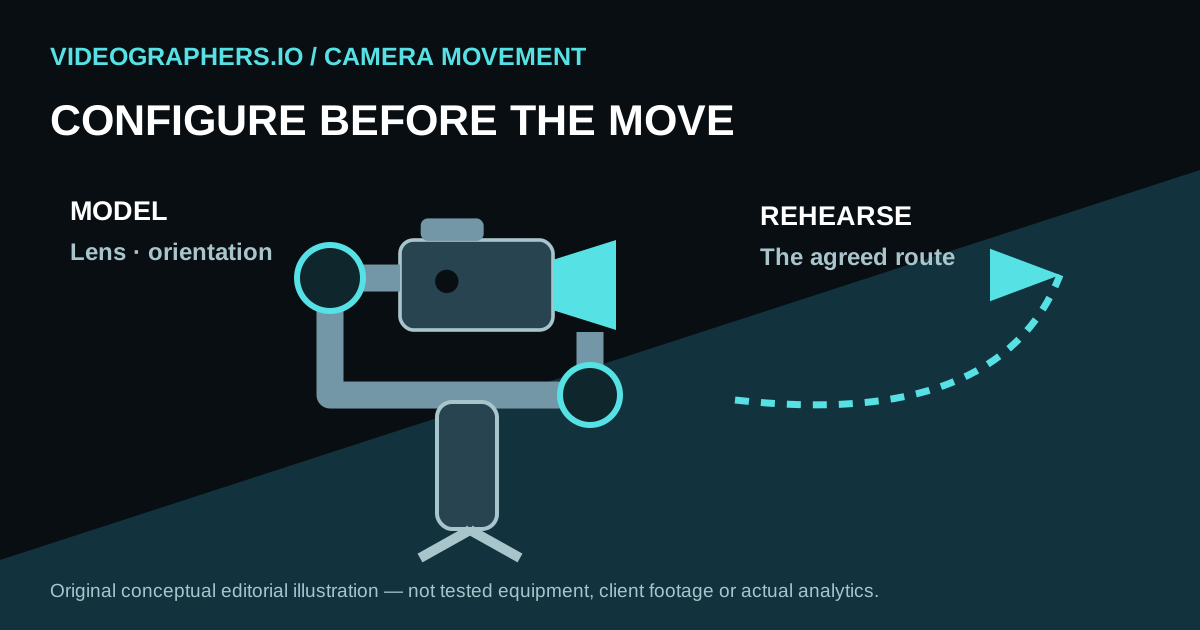
Original evergreen guide researched October29,2026. Source facts are credited below; examples and planning commentary are IAM analysis, not a new announcement.
A moving shot begins before the walk
A planned camera move is also a planned equipment configuration. A lens change, an orientation change or an extra accessory can turn an apparently familiar rig into a different setup. Before the operator rehearses the route, the production team needs to know which camera-and-lens arrangement the shot actually requires and who will check it.
DJI’s official balancing page separates guidance for different Ronin models. Its general notes discuss selecting the intended focal length when balancing with a zoom lens and readjusting balance after changing orientation. This evergreen guide is original production-planning analysis around that evidence, not a replacement for the correct model manual, a payload recommendation or a hands-on equipment test.
Name the actual equipment and intended configuration
Put the exact model in the internal equipment note, along with the camera, lens and accessories the operator intends to use. Ask the qualified operator to confirm the relevant manufacturer instructions and compatibility before the shoot. Similar names in a product family are not proof that mounting steps, clearances or balancing procedures can be copied between models.
For a fictional showroom film, the proposed shot starts wide and follows a presenter towards a display. Decide with the operator whether that requires a fixed focal length or a change during the shot. Record the intention before discussing how to carry it out. A creative request should not become an improvised technical instruction to someone who has not assessed the rig.
Separate a setup change from a creative variation
Give the crew a clear way to announce a configuration change. The note might say that the next take uses a different lens or orientation and needs the operator’s checks before rehearsal. This is a proposed communication practice, not a claim that every change requires identical adjustments. Follow the model-specific instructions and the operator’s assessment.
Rehearse the route with the people responsible for the location. Identify where the presenter stops, where the camera may move and what remains outside the agreed filming area. Do not treat a smooth sample shot as permission to obstruct other people or film private activity. Location access and the practical route are part of the brief, not features supplied by the gimbal.
Give the editor a usable movement note
Identify the intended take and any known limitation in the handoff. Explain whether a pause or change in direction is part of the planned performance rather than leaving the editor to infer it. Keep technical notes concise enough that the producer can distinguish an accepted take from a rehearsal without needing to decode the operator’s entire setup log.
For a small production business, disciplined preparation makes the scope easier to explain and repeat. It does not promise a particular level of stabilisation, eliminate operator skill or make an unsupported camera combination suitable. The useful outcome is an agreed configuration, an assessed route and a documented decision about which material should enter the edit.
Sources and editorial context
Manufacturer guidance is credited directly below. Examples and planning recommendations are original IAM editorial analysis, not hands-on testing or measured client results.
DJI — Balancing Ronin series products — source date not stated on the retrieved page
An enquiry does not confirm a booking, availability or provider acceptance. Include your location, project scope, intended dates and contact details. Avoid sending private client footage before agreeing a secure transfer route.