Turn the event schedule into a priority shot list
A practical event-film planning guide that separates unrepeatable moments, useful supporting coverage and clear decisions when the schedule changes.
Original evergreen guide researched October29,2026. Source facts are credited below; examples and planning commentary are IAM analysis, not a new announcement.
A schedule is not yet a filming plan
An event schedule says when something is expected to happen. A shot list says what the film needs from that moment and where the crew must be to capture it. Converting one into the other forces a useful discussion about priorities before two important activities happen at the same time and one operator is expected to be everywhere.
Adobe’s event-videography guide recommends planning with a venue visit where possible, a map, a schedule, a shot list and a known event contact. This evergreen article builds original IAM planning analysis around that foundation. It is not a claim that a particular event can be covered by a specific crew size or that any shot can be guaranteed.
Separate essential moments from supporting coverage
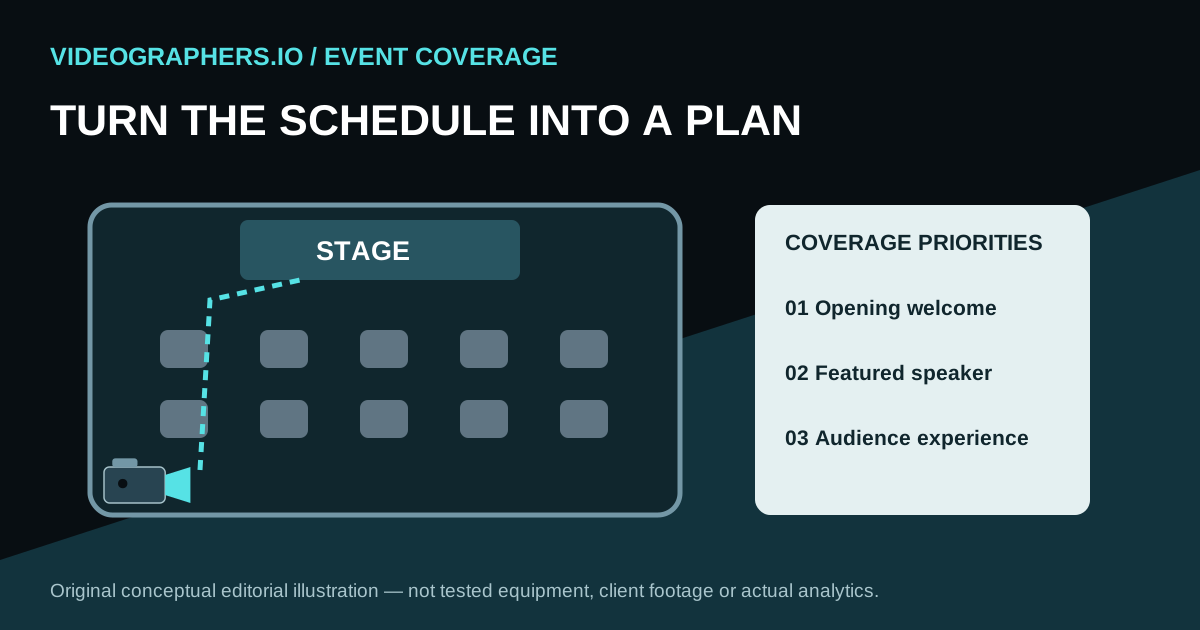
For a fictional community presentation, the organiser wants the opening welcome, the featured speaker and a sense of the audience experience. Mark which moments cannot be repeated and which supporting images can be gathered at another agreed time. Ask the organiser to choose priorities when the requested coverage exceeds the available positions or people.
A useful list records the purpose of a shot as well as its subject. An exterior can establish the location; a reaction can connect the audience to a speaker; a detail can explain an activity. This helps the editor understand why material was gathered. It also prevents a long checklist of attractive images from displacing the moments the commissioned film actually needs.
Connect each priority to a position and contact
Walk through the venue plan with the responsible organiser. Identify the approved camera positions, access times and the person who can clarify a change. Do not assume that a marked position also supplies power, sound access, a clear sightline or permission to film every participant. Confirm the practical arrangements with the relevant people before representing them as part of the service.
Add a simple conflict note where two priorities overlap. The producer can agree a different position, another operator, a revised deliverable or a reduced expectation. Those are scope decisions to confirm directly. Quietly leaving both promises on the list makes the document look complete while hiding the very decision the planning conversation was supposed to resolve.
Plan the update, not just the original version
Agree how schedule changes reach the crew and who can authorise a priority change. A short update should identify the affected moment and the revised intention. Keep private attendee details outside the public production notes. Consent, access and participant handling need their own appropriate arrangements; possession of an event schedule does not establish permission to publish someone’s image.
After the event, give the editor the current priority list and note what was actually recorded. Distinguish unavailable material from material still awaiting review. For a production company, this makes the delivery conversation more concrete without inventing a success story. The purpose is to align coverage with the agreed film, not to promise that preparation can prevent every change in a live event.
Sources and editorial context
Manufacturer guidance is credited directly below. Examples and planning recommendations are original IAM editorial analysis, not hands-on testing or measured client results.
Adobe — A guide to event videography — source date not stated on the retrieved page
An enquiry does not confirm a booking, availability or provider acceptance. Include your location, project scope, intended dates and contact details. Avoid sending private client footage before agreeing a secure transfer route.