Keep the transcript tied to the approved cut: a corporate interview
A practical review for a corporate interview focused on speaker names, technical terms and an approved quotation.
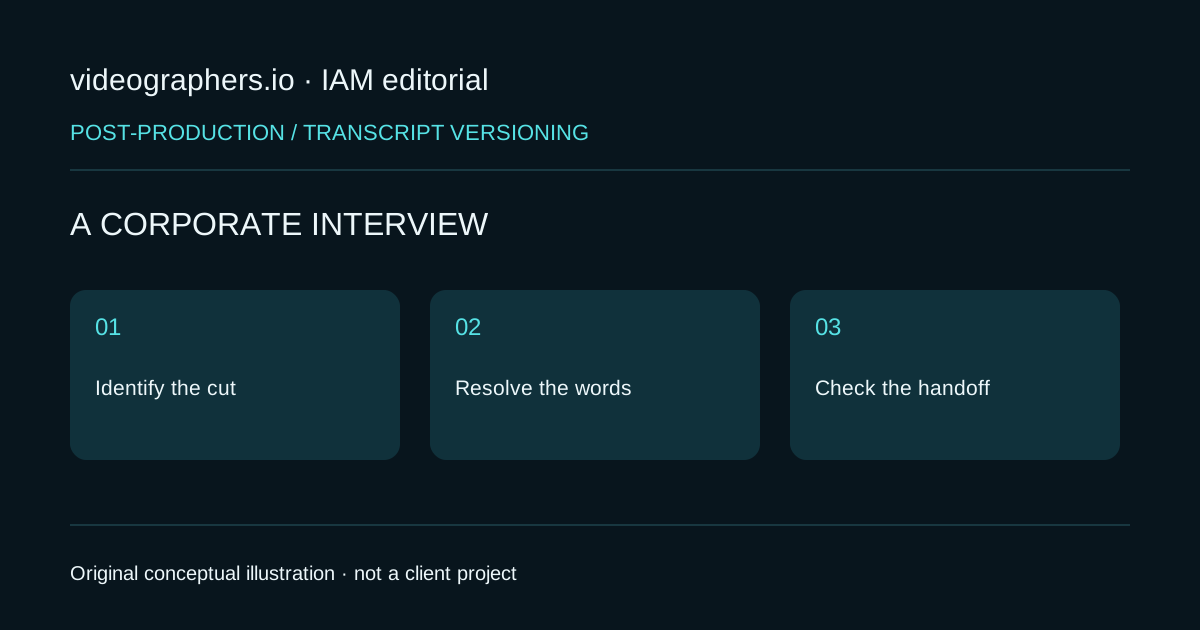
Original evergreen IAM guide. Official documentation checked 2026-11-10T01:58:38.239203+00:00. Source reference date: 2024-09-17. This is a new editorial guide, not a new platform announcement. The production scenario is fictional.
Define the decision for a corporate interview
In a fictional corporate interview, an operations manager names a process while an insert shows a different stage of the work. The communication problem is not simply making the film shorter. The team must establish which statement the picture supports and which names or terms the interviewee needs to check.
W3C WAI distinguishes a basic transcript of speech and relevant sounds from a descriptive transcript that also conveys visual information. Its guidance treats the transcript as an alternative presentation of the media, not simply an attachment with an arbitrary filename. The remaining process suggestions and fictional example are original IAM editorial analysis.
Make the picture version part of the transcript name
Record the exact export the text was checked against. A final picture revision can move a sentence, remove an explanation or change an on-screen name while leaving an earlier text document apparently complete. Put the cut identifier beside the transcript identifier in the delivery note, and make one person responsible for confirming the pair.
A useful review has two passes. First check what was said, including names and specialist terms. Then read the text without playing the film and ask what meaning depends on an action, graphic or speaker change. Write unresolved points as questions for the responsible reviewer rather than guessing a word that sounds plausible.
Give revisions a route back to the text
When an approved edit changes, send the text reviewer a short change note with the affected sequence and version. Do not assume a new export automatically invalidates every line or that a small picture change cannot affect meaning. The reviewer should identify what needs checking, then mark which text version supersedes the earlier one.
Keep the working transcript separate from the audience-facing document. Production comments, private contact details and unresolved questions belong in the review record. The released text should present the agreed content clearly and provide a usable route back to the film where that is part of the publishing arrangement.
Close this particular production handoff
Ask the interview contact to confirm the speaker’s public name and role, the approved terminology and whether the edited answer still represents what they intended to say. Keep the consent and publication approval arrangements with the responsible business; this planning example does not establish permission.
Create a compact interview handoff with the approved cut identifier, a terminology list and the person who can answer a factual question. Flag the insert that needs explanation rather than treating it as neutral decoration. If a late correction changes the statement, send the affected supporting deliverables back through review.
The useful completion record identifies which version the interviewee or authorised reviewer assessed and which questions remain open. It does not claim that the film increased sales, generated leads or proves the speaker’s statements independently.
For an initial Videographers.io enquiry, describe the location, intended audience, timing and deliverables using the existing IAM email route. Do not send private client footage before agreeing an appropriate transfer arrangement. An enquiry does not confirm availability, acceptance or a booking.
Sources and editorial context
Manufacturer guidance is credited directly below. Examples and planning recommendations are original IAM editorial analysis, not hands-on testing or measured client results.
W3C WAI — Transcripts — source date 2024-09-17
An enquiry does not confirm a booking, availability or provider acceptance. Include your location, project scope, intended dates and contact details. Avoid sending private client footage before agreeing a secure transfer route.