Before the interview: rehearse the wardrobe, movement and sound together
An original interview-production planning guide to microphone placement discussions, a movement rehearsal and useful audio handoff notes.
Original evergreen guide researched October29,2026. Manufacturer guidance is credited below; planning commentary is IAM analysis. No hands-on microphone test or new product announcement.
Treat sound preparation as part of the interview
The first useful rehearsal for an interview does not need a perfect answer to the opening question. It needs the speaker, their actual clothing and the movement they will make on camera. A presenter may sound different when turning towards an interviewer, reaching for a demonstration item or adjusting a jacket. Discovering an awkward mounting arrangement before the conversation begins gives the team a chance to reconsider it without interrupting an important answer.
This is an original planning guide for a production business, not a microphone comparison or a report of a new release. Shure’s manufacturer guide explains that placement depends on clothing and production requirements, and that pickup pattern and recording environment matter. Those general principles are the sourced baseline. The rehearsal and communication suggestions here are IAM editorial analysis.
Discuss the arrangement before attaching anything
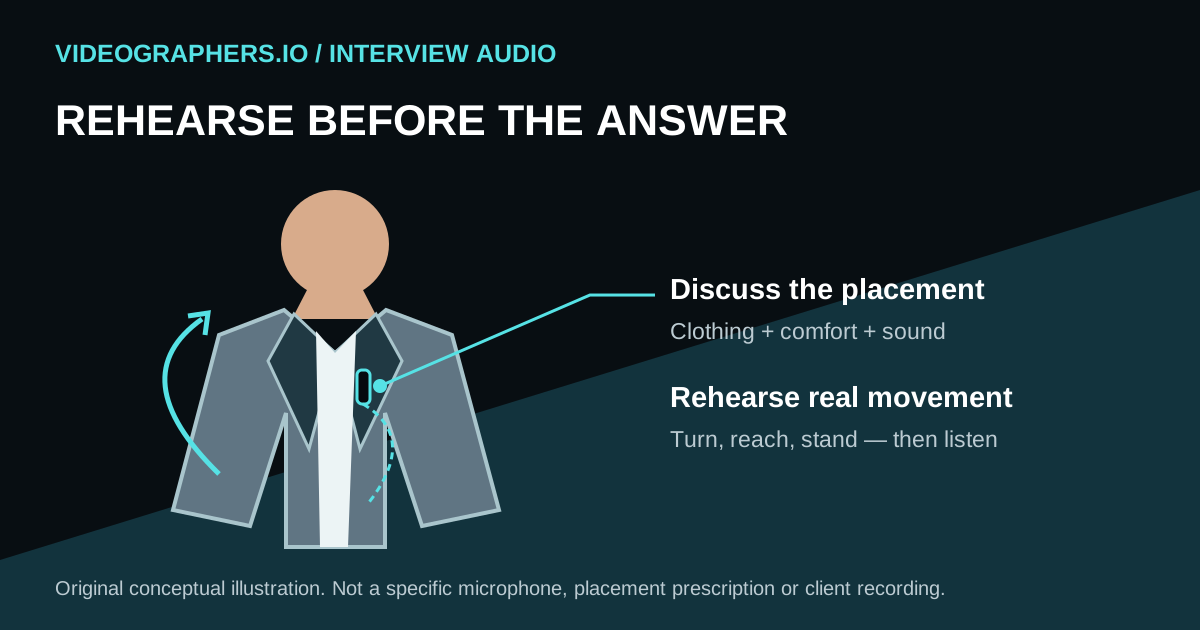
Ask the speaker how they are comfortable being assisted and explain the proposed arrangement in plain language. Give them an opportunity to adjust their own clothing. A sound professional should select and configure equipment for the circumstances; this article does not prescribe a universal mounting position, compatible connector or wireless setting. Follow the relevant equipment instructions rather than borrowing a setting from a different model.
Bring the wardrobe conversation into the planning call. Ask whether the person will wear a jacket, jewellery or an item that could move around the proposed microphone position. Do not demand that the speaker redesign their appearance around an untested assumption. The purpose is to give the crew enough information to prepare alternatives and explain any practical tradeoff.
Rehearse the movements the film actually requires
For a fictional product interview, the presenter begins seated and later stands to show an object. Include both actions in a short rehearsal rather than testing only the seated opening. Ask the responsible sound person to listen to the recorded sample and confirm whether the arrangement is usable. A meter moving on a screen is not the same as a colleague listening to the relevant section.
Record what changed between samples: the speaker’s position, the proposed mounting arrangement and the action being performed. These are useful production notes, not a laboratory test or a promise that a particular microphone will work in every room. If a problem remains unresolved, identify who will decide the next step before the team starts the substantive interview.
Keep a simple note for the editor and producer
The handoff can identify the interview segment, relevant audio file, responsible crew member and any known limitation that needs attention. Keep the note with the authorised production materials. Avoid putting private dialogue, participant contact details or account credentials into a public project page. An editor should be able to understand which recording the note concerns without guessing from a vague message such as “use the good one.”
For the producer, a documented preparation decision makes the client conversation more specific. Explain the planned rehearsal and allow time for it in the schedule. Do not sell this as guaranteed flawless sound or pretend a software cleanup tool removes every production constraint. Good preparation helps the team make an informed decision while the speaker and crew are still present.
Sources and editorial context
Manufacturer guidance is credited directly below. Examples and planning recommendations are original IAM editorial analysis, not hands-on testing or measured client results.
Shure — How to Choose the Best Lavalier Microphone — source date 2023-09-22
An enquiry does not confirm a booking, availability or provider acceptance. Include your location, project scope, intended dates and contact details. Avoid sending private client footage before agreeing a secure transfer route.